

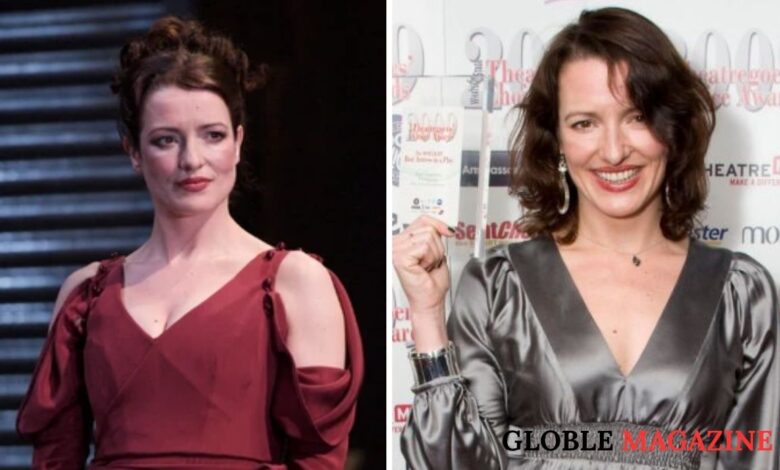
Some performers spend their entire careers chasing the spotlight, while others earn it quietly through years of disciplined craft and unforgettable performances. Katy Stephens belongs firmly in the second group. Over three decades, she has grown from a bubbly children’s television presenter into one of Britain’s most respected classical stage actors, admired for her fearless interpretations of Shakespeare’s most demanding roles. Audiences may have first met her on cheerful 1990s TV, but critics and theater lovers now know her as a powerhouse of the Royal Shakespeare Company and Shakespeare’s Globe.
Her story is a study in reinvention and dedication. Rather than settling into one comfortable niche, she reshaped her public image entirely, trading song-and-dance segments for the searing intensity of Joan of Arc, Cleopatra, and the White Witch. This article traces her early years, professional training, breakthrough performances, celebrated stage roles, awards, and the community work that reveals the values behind the artist. It offers a complete, reliable portrait of a performer whose career deserves far more recognition among American audiences discovering British classical theater.
Quick Bio Table
| Detail | Information |
|---|---|
| Full Name | Katy Stephens |
| Year of Birth | 1970 |
| Birthplace | Southampton, Hampshire, England, UK |
| Nationality | British |
| Profession | Actress, former children’s television presenter |
| Training | Royal Welsh College of Music and Drama; National Youth Theatre |
| Years Active | 1990 – present |
| Known For | The Fun Song Factory, RSC Histories Cycle, Shakespeare’s Globe |
| Notable Roles | Joan of Arc, Margaret of Anjou, Cleopatra, Rosalind, The White Witch |
| Major Award | WhatsOnStage Award for Best Actress (2009) |
| Ensemble Honor | Olivier Award for Best Ensemble Performance |
| Affiliation | Associate Artist, Royal Shakespeare Company |
| Charity Work | Board member, Ego Performance Company (Coventry) |
Early Life and Background
Katy Stephens was born in 1970 in Southampton, a bustling port city on England’s southern coast. Growing up in Hampshire, she developed an early appetite for performance, and by her teenage years she had found her way to the National Youth Theatre, a launchpad that has shaped many of Britain’s finest actors. That early exposure to serious stagecraft planted the seeds for the classical career she would later build, giving her both technical grounding and the confidence to pursue acting as a genuine profession rather than a passing hobby.
What makes her origins compelling is the balance between playful energy and disciplined ambition. In interviews she has spoken warmly about the influence of her parents, crediting their loving relationship as a source of inspiration and stability. That grounded upbringing helps explain the emotional generosity she brings to the stage. Even in her most terrifying roles, there is a humanity underneath, a warmth that keeps audiences leaning forward rather than pulling away from the villains and warriors she so often portrays.
Education and Professional Training
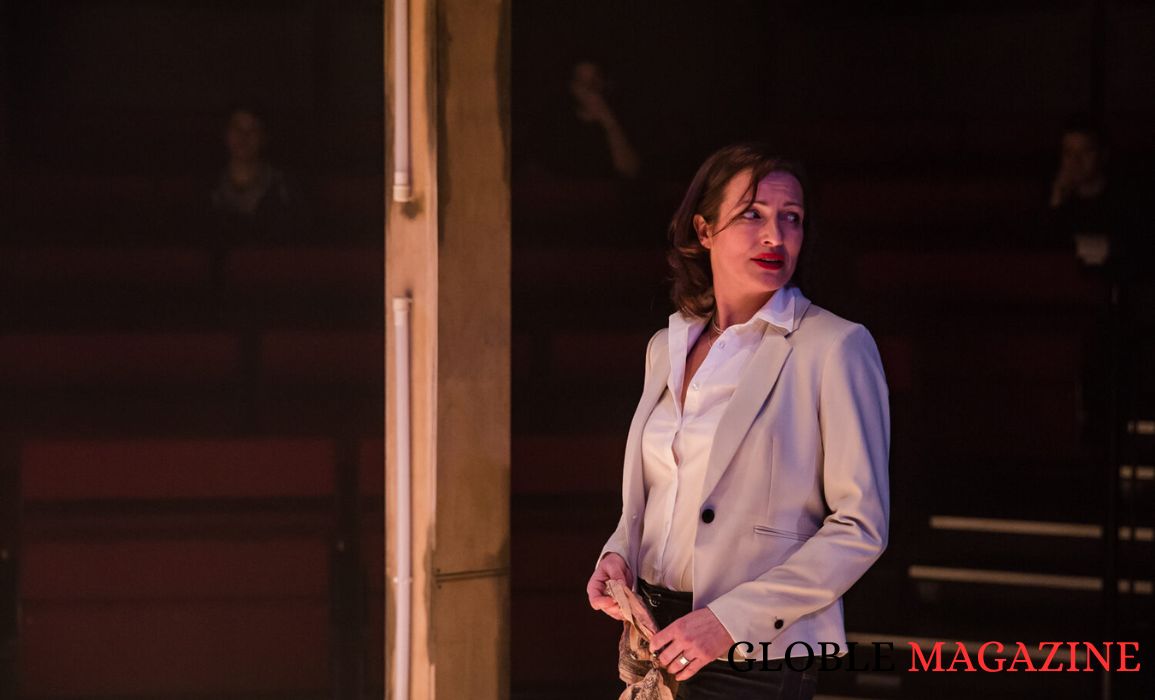
Formal training gave Stephens the tools to turn raw talent into a lasting career. She studied at the Royal Welsh College of Music and Drama, one of the United Kingdom’s most prestigious conservatoires, known for producing actors equipped for the rigor of classical repertory work. The intensive vocal, physical, and text-based training offered at such institutions is precisely what prepares performers for the marathon demands of Shakespeare, where an actor may carry a three-hour production night after night.
Combined with her earlier experience at the National Youth Theatre, this education gave her a rare double advantage. She entered the profession with both the instincts of a natural entertainer and the technical precision of a classically trained stage actor. That foundation would prove essential when she later tackled some of the most physically and emotionally punishing roles in the dramatic canon, from doomed queens to battlefield heroines who die and are reborn across multiple plays in a single sprawling saga.
From Television Presenter to Serious Actress
Before she became a fixture of Britain’s great classical stages, Katy Stephens was a familiar face in living rooms across the country. In the 1990s she co-presented the popular children’s series The Fun Song Factory, a lively program full of singing, dancing, and energetic performance. She also appeared in the GMTV era of the show and lent her talents to related nursery-rhyme specials, becoming a cheerful, recognizable presence for a generation of young viewers who grew up watching morning television.
Her early screen work was not limited to children’s programming. She appeared as Nicky in the long-running British drama series London’s Burning, demonstrating range beyond her upbeat presenting persona. Yet the most remarkable part of her journey is the pivot that followed. Rather than remaining comfortably typecast, she redirected her career toward the demanding world of classical theater. That transformation, from television entertainer to celebrated Shakespearean, is one of the most striking reinventions in modern British acting and speaks to both her ambition and her refusal to be defined by a single early success.
Breakthrough with the Royal Shakespeare Company
The defining chapter of Stephens’s career unfolded at the Royal Shakespeare Company, where she rose to prominence and eventually earned the title of Associate Artist, a distinction reserved for performers with a deep, ongoing relationship to the company. Her work there covers an astonishing spread of the Shakespearean canon, and it was at the RSC that she delivered the performances that transformed her reputation from talented television personality into a formidable classical actor of the first rank.
Her most celebrated achievement came in Michael Boyd’s monumental Histories Cycle, a multi-play staging of Shakespeare’s history plays. In it, she played Joan of Arc in Henry VI Part 1 and then, after her character was burned at the stake, reincarnated onstage as Margaret of Anjou, carrying that role through the remaining plays and into old age in Richard III. It was a feat of stamina and range few actors ever attempt, let alone master, and it announced her as a performer capable of anchoring the most ambitious productions in British theater.
Signature Shakespearean Roles
Stephens’s range across Shakespeare’s works is genuinely remarkable, spanning tragedy, comedy, and history with equal command. Her most notable stage roles for the Royal Shakespeare Company and beyond include a striking variety of iconic characters:
- Rosalind in As You Like It, the witty, resourceful heroine at the heart of one of Shakespeare’s beloved comedies
- Cleopatra in Antony and Cleopatra, the seductive and tragic Egyptian queen
- Tamora in Titus Andronicus, the vengeful Queen of the Goths
- Regan in King Lear, one of the play’s ruthless, scheming daughters
- Petruchio in The Taming of the Shrew, a gender-flipped take on the domineering suitor
- Joan of Arc and Margaret of Anjou in the epic Histories Cycle
This breadth reveals an actor unafraid of complexity. She gravitates toward characters who are powerful, morally complicated, and often dangerous, finding the vulnerability inside their ferocity and the ferocity inside their vulnerability. That instinct for contradiction is precisely what makes her performances so memorable to critics and audiences alike.
Acclaimed Work at Shakespeare’s Globe
Alongside her RSC achievements, Katy Stephens built an equally impressive body of work at Shakespeare’s Globe, the reconstructed open-air theater on the banks of London’s River Thames. The Globe presents a unique challenge for actors, demanding they command an exposed stage and connect directly with a lively standing audience, often in daylight and without the safety net of theatrical darkness. Stephens thrived in that environment, bringing her characteristic intensity to some of the venue’s most notable productions.
Her Globe credits include Clytemnestra in The Oresteia, Calpurnia in Julius Caesar, and Iras in Antony and Cleopatra, along with appearances in Titus Andronicus, Much Ado About Nothing, and The Tempest. Her performance in the Globe’s Julius Caesar was later captured for the Globe on Screen series, allowing wider audiences, including viewers in the United States, to experience her work without traveling to London. These filmed productions have played an important role in extending her reach beyond the walls of a single theater.
Recent Roles and Ongoing Career
Far from slowing down, Stephens has continued to take on high-profile roles in recent years. One of her most visible modern performances is as the White Witch in the acclaimed stage adaptation of C.S. Lewis’s The Lion, the Witch and the Wardrobe. The production has toured widely across the UK and Ireland and enjoyed West End and London seasons, with Stephens embodying the chilling, commanding villain at the story’s center. Her casting in such a well-loved family classic introduced her artistry to entirely new audiences.
Her continued presence in major touring and London productions underscores her staying power in a notoriously competitive profession where careers can fade quickly. She has also taken on directing work, expanding her creative footprint beyond performance and stepping confidently to the other side of the rehearsal room. This willingness to evolve, from presenter to actor to director, reflects a restless artistic curiosity that has kept her career vital and relevant across more than three decades. Few performers manage such longevity while maintaining both critical respect and genuine audience affection.
Awards and Industry Recognition
Recognition from peers and critics has followed Stephens throughout her classical career. Her towering dual performance as Joan of Arc and Margaret of Anjou in the RSC’s Histories Cycle earned her the WhatsOnStage Award for Best Actress in 2009, one of British theater’s most prestigious honors, voted for by the public alongside industry insiders. The award confirmed what audiences already sensed, that she had delivered one of the standout performances of her generation.
The same landmark production also brought her an Olivier Award, the highest accolade in British theater, as part of the ensemble that won Best Ensemble Performance. Sharing in an Olivier reflects not only individual brilliance but also her value as a collaborative company member, someone who elevates the work of everyone around her. These honors together establish her authority and credibility as a classical performer of real distinction, admired within the profession as much as by the public.
Community Work and Personal Values
Beyond the stage, Katy Stephens has channeled her talents into meaningful community work, revealing the values that guide her career. She serves as a board member for the Ego Performance Company, a Coventry-based charity that works with performers of all ages and abilities. Through this organization she runs Bold As Bard, a Shakespeare theater company created specifically for adults with learning disabilities, opening the transformative power of performance to people often excluded from the arts.
This commitment reflects a deeply held belief in the arts as a vehicle for social mobility and inclusion, a theme she has spoken about openly and with obvious passion. Having risen from cheerful morning television to the pinnacle of classical theater, she understands better than most how transformative access to the performing arts can be, and she seems determined to widen that door for others. Her advocacy for accessible, community-rooted performance adds a dimension to her legacy that goes beyond awards and reviews. It shows an artist who understands that theater is not only a career but also a public good, capable of changing lives well beyond the professional stage. That generosity of spirit is, in many ways, the throughline connecting every chapter of her remarkable journey.
Final Thoughts
Katy Stephens embodies the kind of career that rewards patience, versatility, and genuine artistic courage. She began as a joyful children’s television presenter and steadily built one of the most respected classical acting resumes in modern British theater, mastering roles that many performers would never dare attempt. From the reincarnating fury of Joan of Arc and Margaret of Anjou to the icy menace of the White Witch, she has proven again and again that she can command any stage she steps onto.
What ultimately distinguishes her is not just talent but purpose. Her decades at the Royal Shakespeare Company and Shakespeare’s Globe, her hard-won awards, and her devotion to inclusive community theater all point to an artist who takes both her craft and its wider responsibilities seriously. For American audiences beginning to explore British classical theater, her filmed performances offer a perfect entry point. Katy Stephens remains a shining example of what a lifetime of dedicated, fearless performance can achieve.
Frequently Asked Questions (FAQs)
Who is Katy Stephens?
Katy Stephens is a British actress and former children’s television presenter, born in 1970 in Southampton, England. She is best known for her leading classical roles at the Royal Shakespeare Company and Shakespeare’s Globe, where she serves as an Associate Artist.
How old is Katy Stephens?
Katy Stephens was born in 1970, which places her in her mid-fifties as of 2026. Her exact date of birth has not been widely publicized, but her birth year is well documented across reliable industry sources.
What is Katy Stephens best known for?
She is best known for her extraordinary dual performance as Joan of Arc and Margaret of Anjou in the RSC’s Histories Cycle. She is also widely recognized for co-presenting the 1990s children’s show The Fun Song Factory and for playing the White Witch in The Lion, the Witch and the Wardrobe.
Where did Katy Stephens train as an actress?
She trained at the Royal Welsh College of Music and Drama, one of the UK’s most respected conservatoires. She also gained early experience through the National Youth Theatre, which helped build her classical foundation.
What awards has Katy Stephens won?
Katy Stephens won the WhatsOnStage Award for Best Actress in 2009 for her role in the Histories Cycle. She was also part of the ensemble that received the Olivier Award for Best Ensemble Performance for the same landmark production.
What roles has Katy Stephens played at Shakespeare’s Globe?
At Shakespeare’s Globe, she has played Clytemnestra in The Oresteia, Calpurnia in Julius Caesar, and Iras in Antony and Cleopatra. Her Globe credits also include productions of Titus Andronicus, Much Ado About Nothing, and The Tempest.
Was Katy Stephens on television?
Yes, she was a co-presenter on the popular 1990s children’s series The Fun Song Factory. She also appeared in the British drama London’s Burning, playing a character named Nicky.
What is Katy Stephens doing now?
She continues to work in major stage productions, most notably playing the White Witch in the touring and London stagings of The Lion, the Witch and the Wardrobe. She has also expanded into directing in recent years.
Is Katy Stephens involved in charity work?
Yes, she is a board member for the Ego Performance Company in Coventry. Through it she runs Bold As Bard, a Shakespeare theater company for adults with learning disabilities.
Can American audiences watch Katy Stephens perform?
Yes, some of her performances have been filmed and distributed through the Globe on Screen and National Theatre Live series. These recordings, including Julius Caesar and Antony and Cleopatra, allow audiences in the United States to experience her work.
Stay connected with us for more updates: GLOBLE MAGAZINE