

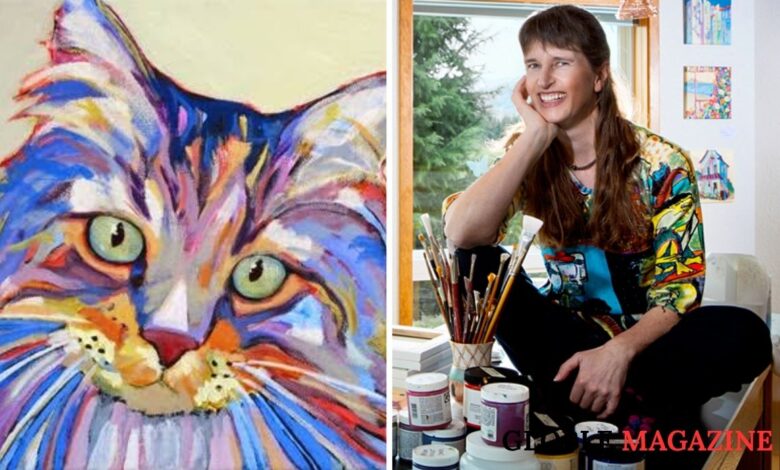
Some artists spend a lifetime chasing a single, recognizable signature. Carolee Clark found hers in color. Based in the small town of Philomath, Oregon, she has built a devoted following for acrylic and watercolor paintings that practically hum with energy. Her landscapes glow, her still lifes shimmer, and even her quiet farm scenes feel alive with movement and light. For collectors who want art that lifts a room, her work has become a go-to.
What makes her story compelling isn’t just the finished paintings, though. It’s the path she took to get there — a childhood spent watching her mother paint, a small gift that changed everything, and a fearless willingness to reinvent her style even after she had already won awards. This article takes a close look at who Carolee Clark is, how her creative voice developed, and why her vibrant canvases continue to resonate with art lovers across the United States and beyond.
Quick Bio Table
| Detail | Information |
|---|---|
| Full Name | Carolee S. Clark |
| Known As | The Vibrant One |
| Profession | Painter (Acrylic and Watercolor) |
| Nationality | Canadian-American |
| Birthplace | Okanagan Valley, Canada |
| Current Residence | Philomath, Oregon, USA |
| Primary Medium | Acrylic on canvas |
| Signature Style | Bold, contemporary use of color |
| Common Subjects | Landscapes, figures, florals, animals, urban scenes |
| Notable Feature Credits | Cover art for Psicologia, Bethesda magazine, Calyx |
| Gallery Representation | Ryan Gallery (Oregon), Xanadu Gallery (Arizona) |
| Community Involvement | Philomath Open Studios Tour |
| Known For | Award-winning color-driven paintings |
Early Life and the Spark of Color
Carolee Clark grew up in the scenic Okanagan Valley of Canada, a region known for its lakes, orchards, and rolling hillsides. That landscape, all sweeping vistas and shifting light, would echo throughout her later work. She was raised in a household where creativity was simply part of daily life. Her mother painted as a hobby, and rather than shooing the children away from the easel, she encouraged Clark and her sisters to draw alongside her.
That early exposure planted a seed, but the real turning point came later. As a young adult, Clark received a small set of watercolors from her mother — a modest gift that turned out to be transformative. She has often described that moment as the day the world of color opened up to her. Drawing had always been second nature, something she had done for as long as she could remember, but pigment gave her a whole new language. From that point on, the pursuit of color became the driving force behind everything she created.
Finding Her Voice as a Painter
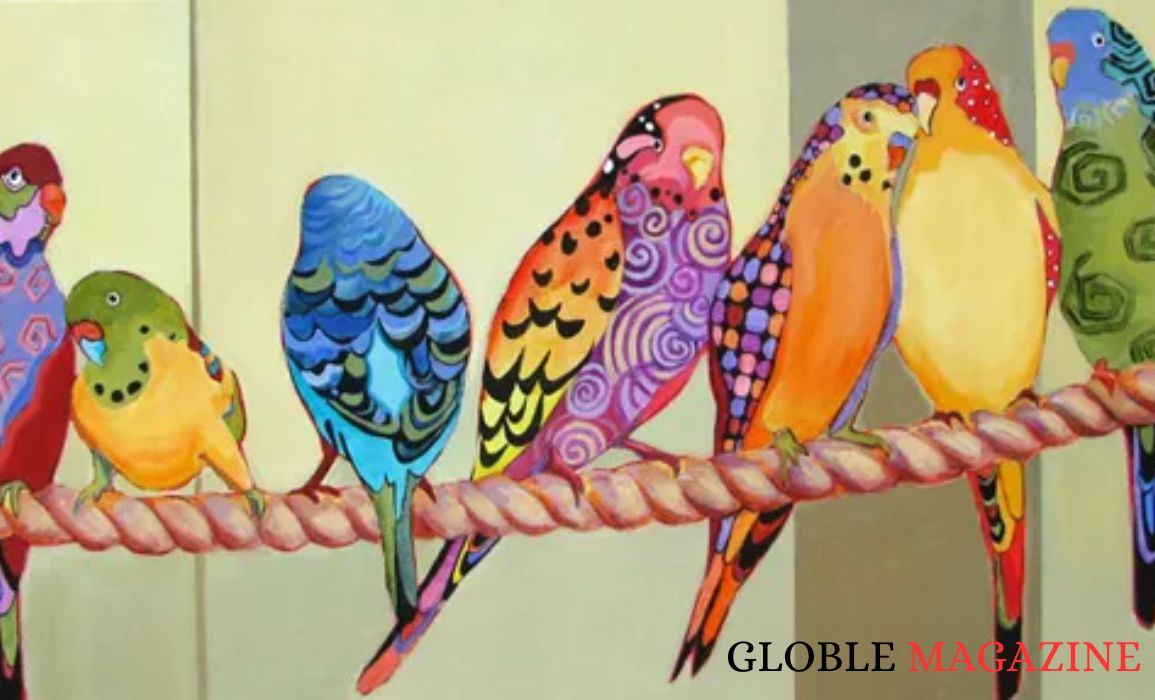
Clark’s early professional years were rooted in watercolor, a medium famous for its unforgiving nature. Once the paint hits the paper, there’s little room to correct a mistake. That challenge suited her, and she thrived, eventually earning recognition and awards for her watercolor work. For many artists, that kind of success would be a reason to stay put. Clark did the opposite.
In a move that surprised even those close to her, she suddenly shifted from watercolor to acrylic. It was an unexpected pivot, and yet the one constant carried straight across the divide: her love of vivid, expressive color. Whether she was working in delicate washes or thick, confident strokes, the palette remained unmistakably hers. This adaptability is a defining trait of her career. She treats mediums, methods, and subject matter as territory to be explored rather than settled, and that curiosity keeps her paintings feeling fresh decades into her practice.
A Signature Built on Bold Color
If you ask longtime followers what defines a Carolee Clark painting, the answer almost always circles back to color. Her canvases lean into saturated blues, warm golds, deep purples, and lush greens, often arranged in ways that feel intuitive rather than calculated. She has spoken about wanting to “push paint around” and simply create beauty, and that spirit of playful experimentation comes through in the finished work.
Her subject matter is refreshingly wide-ranging. She paints tumbling countryside scenes, houses perched on hilltops, floral bouquets, cats and rabbits, and lively urban moments like a shopping trip or a busy street. What ties it all together isn’t the subject at all — it’s the emotional charge of the color and the sense of joy embedded in each piece. Some standout works in her body of paintings include:
- Tapestry Hill — a larger landscape rich with layered, textured color
- Muted Morning — a quieter, atmospheric farm scene near Corvallis, Oregon
- Twig & Blossom — a small, delicate floral study on wrapped canvas
- Various animal portraits, from beagles to bunnies, rendered with playful palettes
- Urban and figurative scenes that capture everyday life with warmth and motion
This range shows a painter who refuses to be boxed into a single genre, yet still maintains a cohesive artistic identity across everything she touches.
Life and Work in Philomath, Oregon
Today, Carolee Clark lives and works as a full-time artist in Philomath, a small community just west of Corvallis in Oregon’s Willamette Valley. The surrounding landscape — its forests, farmland, and gentle hills — feeds directly into her work. She has drawn from reference photos taken on walks through nearby MacDonald Forest, translating quiet natural moments into color-soaked compositions.
Being a working artist in a smaller town has shaped how she connects with her audience. Rather than relying solely on big-city gallery foot traffic, Clark built her reputation through a mix of channels. She has sold paintings through galleries and, notably, embraced the internet early as a way to reach collectors directly. That willingness to sell work online, combined with a daily-painting approach that keeps her prolific and visible, helped her cultivate a national and even international following well before it became standard practice for independent artists.
Community and the Philomath Open Studios Tour
Clark is also an active member of the Philomath Open Studios Tour, an annual event that invites the public into local artists’ working spaces. For an artist, opening the studio door is a generous act — it lets visitors see the process behind the polish, from half-formed sketches to finished canvases. Her participation reflects a genuine investment in her local arts community, not just her own career.
This kind of engagement matters for reasons beyond goodwill. Studio tours give collectors a chance to meet the person behind the paintings, ask questions, and understand the choices that go into each work. That transparency builds trust, and it reinforces Clark’s standing as an accessible, community-minded artist rather than a distant name on a gallery label.
Collaboration and Creative Growth
One of the most revealing chapters in Clark’s artistic journey involves collaboration. For roughly seven years, she painted weekly alongside fellow acrylic artist Donna Beverly. In 2007, Beverly, feeling stuck on a piece, half-jokingly suggested they paint on each other’s canvases. Clark agreed without hesitation, and the experiment became one of the most educational projects of her career.
Painting over another artist’s work — or handing your own painting to someone else — requires real trust and a loose grip on ego. It forces an artist to respond in the moment, to build on unexpected marks, and to let go of the need for total control. For Clark, whose whole philosophy centers on exploration and joyful experimentation, that kind of collaboration was a natural fit. It underscores a recurring theme in her career: growth comes from staying open, taking risks, and treating the canvas as a place to discover rather than merely to execute.
Recognition, Exhibitions, and Published Work
Over the years, Carolee Clark’s paintings have found their way into public and private collections around the globe. Her canvases hang in homes and spaces across the United States and internationally, a reach made possible by both traditional gallery sales and her direct online presence. That geographic spread speaks to the universal appeal of her color-forward approach — vibrant, uplifting art tends to translate across cultures and borders.
Her work has also earned editorial recognition beyond the gallery walls. Clark’s paintings have appeared on the covers of the Portuguese journal Psicologia, Bethesda magazine, and the literary and arts journal Calyx. Cover placements like these are meaningful because they signal that her art carries an emotional and conceptual weight suited to representing entire publications. Combined with her early awards in watercolor, these credits round out a portfolio that blends commercial success, critical visibility, and lasting collector demand.
Where to Find Her Art
For those interested in owning or viewing her paintings, Clark’s work is represented through a handful of galleries and platforms. Her pieces have been available through Ryan Gallery in Lincoln City, Oregon, and Xanadu Gallery in Scottsdale, Arizona, among other venues. She has also maintained an active online catalog of original acrylic and watercolor paintings, frequently offering smaller, affordable works alongside larger statement pieces.
This tiered approach — small daily paintings for newer collectors and larger, higher-priced canvases for serious buyers — reflects a thoughtful understanding of her audience. It makes her art approachable for people just beginning to collect while still serving those looking to invest in a substantial centerpiece. That accessibility has been central to building the broad, loyal following she enjoys today.
Why Carolee Clark’s Work Still Resonates
In an art world that often prizes irony, minimalism, or shock value, Clark’s paintings offer something increasingly rare: unapologetic joy. Her canvases don’t ask viewers to decode a hidden message. Instead, they invite an immediate emotional response — a lift, a warmth, a smile. That directness is part of why her work connects so easily with everyday collectors rather than only art-world insiders.
There’s also a quiet authenticity to her career that resonates in a digital age. She built her name through consistent daily practice, honest engagement with her community, and a genuine love of her craft rather than aggressive self-promotion. Her paintings feel personal because they are, each one reflecting a real moment, a real place, or a real experiment. For a U.S. audience surrounded by mass-produced imagery, that handmade sincerity carries real value, and it’s a major reason her bold, colorful canvases continue to earn new admirers year after year.
Final Thoughts
Carolee Clark’s story is a reminder that a distinctive artistic voice isn’t handed to anyone — it’s discovered, tested, and refined over decades. From a childhood at her mother’s easel in the Okanagan Valley to a thriving full-time practice in Philomath, Oregon, she has stayed true to the one element that first captivated her: color. Her willingness to leap from award-winning watercolors into acrylic, to collaborate, to experiment, and to open her studio to the public all point to an artist far more interested in growth than in comfort.
The result is a body of work that feels both cohesive and endlessly varied — landscapes, florals, animals, and figures united by a fearless, joyful palette. For collectors and casual admirers alike, Carolee Clark represents the kind of artist who makes color feel like a language worth learning. Her canvases don’t just decorate a wall; they change the mood of the room, and that lasting emotional impact is exactly what keeps drawing people back to her work.
Frequently Asked Questions (FAQs)
Who is Carolee Clark?
Carolee Clark is a full-time painter based in Philomath, Oregon, best known for her bold, color-driven acrylic and watercolor paintings. She works across many subjects, including landscapes, florals, animals, and figures, and has earned a loyal following both in the United States and internationally.
What kind of art does Carolee Clark create?
She creates vibrant contemporary paintings, working primarily in acrylic today after earning her early recognition in watercolor. Her signature is her saturated, expressive use of color, which appears across landscapes, still lifes, urban scenes, and animal portraits.
Where is Carolee Clark from?
Clark grew up in the scenic Okanagan Valley of Canada, where she was surrounded by dramatic natural landscapes and an artistic home life. She later settled in Philomath, Oregon, where she now lives and paints full time.
How did Carolee Clark become an artist?
She was drawn to drawing from a very young age, encouraged by a mother who painted as a hobby. A small set of watercolors gifted to her as a young adult opened up the world of color and set her on the path to a full-time painting career.
Why did Carolee Clark switch from watercolor to acrylic?
After winning awards in watercolor, Clark unexpectedly transitioned to acrylic, a shift that surprised many who knew her work. What stayed constant was her love of vivid color, which carried seamlessly across both mediums and continues to define her style.
What is Carolee Clark’s painting style known for?
Her style is defined by bold, joyful color and a sense of energy and movement in every piece. Rather than hidden symbolism, her paintings aim for immediate emotional impact, making them especially popular with collectors who want uplifting, expressive art.
Where can I see or buy Carolee Clark’s paintings?
Her work has been represented by galleries including Ryan Gallery in Lincoln City, Oregon, and Xanadu Gallery in Scottsdale, Arizona. She has also maintained an active online presence, offering both smaller affordable pieces and larger original canvases directly to collectors.
Has Carolee Clark’s work been published or featured?
Yes. Her paintings have appeared on the covers of the Portuguese journal Psicologia, Bethesda magazine, and the arts journal Calyx. These features reflect the emotional and visual strength that has made her art appealing to a wide audience.
What is the Philomath Open Studios Tour, and how is Clark involved?
The Philomath Open Studios Tour is an annual event that lets the public visit local artists’ working spaces in Oregon. Clark participates as a member, opening her studio to visitors and giving collectors a firsthand look at her creative process.
What makes Carolee Clark’s art appealing to collectors?
Collectors are drawn to the warmth, optimism, and vibrant color that define her paintings, along with her range across many subjects. Her mix of smaller, accessible works and larger statement pieces makes her art approachable for new buyers and serious collectors alike.
Stay connected with us for more updates: GLOBLE MAGAZINE