
Neil Shawcross: The Life and Legacy of Northern Ireland’s Master Portrait Painter

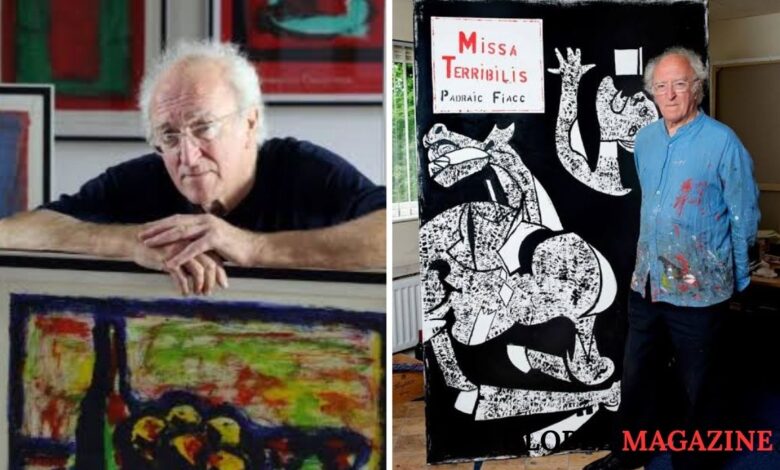
Few artists have shaped the visual identity of a place the way Neil Shawcross has shaped modern art in Belfast. Born in the north of England but claimed wholeheartedly by Northern Ireland, he built a career that spans more than six decades of vivid color, bold line, and an unmistakable joy in the act of painting. His portraits hang in major public collections, his students went on to lead the region’s creative scene, and his name has become shorthand for a certain generous, unpretentious spirit in Irish art.
This biography looks at the full arc of his story: his working-class roots in Lancashire, his move across the Irish Sea, his rise as one of the most respected figurative painters of his generation, and the honors that eventually recognized his contribution. Along the way, it explores the qualities that make his canvases instantly recognizable and explains why his influence continues to ripple through galleries, classrooms, and private collections on both sides of the Atlantic.
Quick Bio Table
| Detail | Information |
|---|---|
| Full Name | Neil Shawcross |
| Honors | MBE, RHA, HRUA |
| Date of Birth | March 15, 1940 |
| Age | 85 (as of 2025) |
| Birthplace | Kearsley, Lancashire, England |
| Nationality | British; long-term resident of Northern Ireland |
| Education | Bolton College of Art; Lancaster College of Art |
| Known For | Portraiture, figure painting, still life, printmaking, stained glass |
| Art Movement | Post-Impressionism / Colourist tradition |
| Based In | Belfast, Northern Ireland (since 1962) |
| Career | Painter and long-serving art lecturer |
| Notable Award | MBE for services to the arts (2014) |
| Major Institutions | Ulster Museum; Arts Council of Northern Ireland |
Early Life and Roots in Lancashire
Neil Shawcross was born on March 15, 1940, in Kearsley, a small town in Lancashire, England. He grew up in an industrial northern landscape far removed from the art world he would eventually help define. Yet even as a boy his instincts pointed toward drawing and making, and his talent found its first real footing when he enrolled at Bolton Junior Art School in the early 1950s. Those formative years gave him the discipline of daily practice and a lasting belief that art belonged to ordinary life, not just to grand institutions.
His formal training continued at Bolton College of Art between 1955 and 1958, followed by Lancaster College of Art from 1958 to 1960. During this period he absorbed the lessons of European modernism, developing a deep admiration for painters such as Henri Matisse and Georges Braque. He was drawn to their fearless use of color and their willingness to simplify form for expressive effect. This early enthusiasm for the Post-Impressionist and modernist traditions would remain the backbone of his approach for the rest of his life.
The Move to Belfast
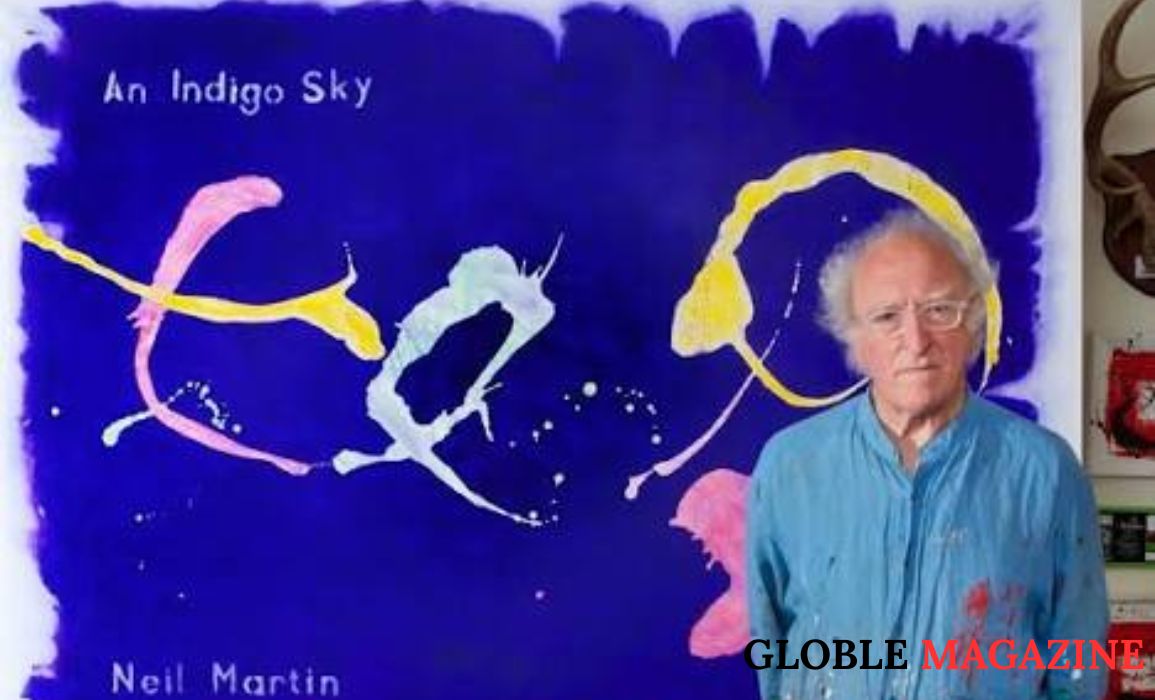
The turning point came in 1962, when the young painter crossed the Irish Sea to take up a teaching post in Northern Ireland. What began as a professional opportunity quickly became a lifelong commitment to a place and its people. Shawcross joined the staff of the Belfast College of Art as a part-time lecturer, and by 1968 he had become a full-time member of the faculty. He continued teaching there until his retirement in 2004, meaning generations of Northern Irish artists passed through his classroom.
Belfast suited him. He embraced the city’s cultural energy and its close-knit creative community, becoming a familiar and much-loved figure in local artistic circles. He was also a passionate lover of jazz, and his friendships with record-shop owners and music enthusiasts connected him to a wider bohemian world that fed his sense of rhythm and spontaneity on the canvas. Over time the outsider from Lancashire became an insider, so identified with the region that many now think of him simply as a Northern Irish artist.
A Distinctive Artistic Style
Color, Line, and a Childlike Freedom
What sets Shawcross apart is a visual language that feels immediate and alive. He is celebrated as a colorist and figure painter who treats composition with a self-consciously childlike freshness. Rather than chasing photographic accuracy, he flattens space, exaggerates outlines, and lets pure, saturated color carry the emotional weight of a picture. The result is work that looks deceptively simple yet reveals enormous sophistication in its balance and confidence.
His interest in popular art, ephemera, and everyday objects also shaped his sensibility. He famously drew inspiration from the graphic design of Penguin book covers, and that fascination with printed matter, lettering, and mass culture eventually found its way into ambitious painting series. This blending of high art and popular imagery gives his work a warmth and accessibility that resonates with viewers who might otherwise feel excluded by contemporary painting.
The Art of the Portrait
Portraiture stands at the heart of the artist’s reputation. He approached the human face not as a problem of likeness alone but as an opportunity to capture personality through gesture, posture, and color. His sitters read as real presences, often rendered with a directness that feels both respectful and playful. This combination of insight and spontaneity is why so many public figures were willing to sit for him, and why the portraits endure as cultural documents as much as works of art.
Notable Works and Famous Subjects
Over his long career, this Belfast-based painter produced portraits of some of Ireland’s most significant cultural and public figures. His subjects form a roll call of twentieth-century Irish achievement, and his canvases now serve as a visual archive of a remarkable era. Among his best-known portrait commissions and celebrated works are the following:
- A portrait of Nobel Prize–winning poet Seamus Heaney, capturing one of Ireland’s greatest literary voices.
- A painting of novelist Francis Stuart, created for the Ulster Museum’s permanent collection.
- A commissioned portrait of former Lord Mayor of Belfast David Cook, produced for Belfast City Council.
- A striking image of footballer Derek Dougan, reflecting the artist’s range beyond the literary world.
- Portraits of fellow artists Colin Middleton and Terry Frost, honoring peers he admired.
- The acclaimed Writers of Belfast series, monumental canvases inspired by his love of book-cover design.
Beyond portraiture, he was a prolific painter of still life and the human figure, and around 2007 he embarked on a series of large-scale nude studies notable for their exuberant, paint-splattered energy. His creative output also extended into three dimensions and craft, demonstrating a restless curiosity that kept his practice fresh across decades.
Beyond Painting: Printmaking and Stained Glass
Shawcross never confined himself to a single medium. He was an accomplished printmaker, and his graphic work carries the same bold sense of design that defines his paintings. This willingness to experiment across disciplines marks him as an artist genuinely interested in how images are made and shared, not merely in producing collectible canvases.
Perhaps most surprising to newcomers is his work in stained glass. He designed large-scale stained-glass installations, including pieces created for the Ulster Museum and for St. Colman’s Church in Lambeg, County Antrim. Translating his painterly instinct for color into glass and light required a different kind of technical mastery, and the commissions show how comfortably he moved between the intimate scale of a portrait and the architectural ambition of a public installation.
A Lifelong Teacher and Mentor
It would be impossible to measure Shawcross’s importance without acknowledging his decades in the classroom. As a lecturer at the Belfast College of Art and later within the University of Ulster’s art programs, he helped train wave after wave of emerging talent. His retirement in 2004 closed a teaching career that had lasted more than thirty years and touched countless lives.
Colleagues and former students consistently describe him as generous, encouraging, and devoted to the idea that art should be joyful rather than intimidating. That teaching philosophy mirrors his own work: open, direct, and rooted in the pleasure of looking closely at the world. Through his students, his influence multiplied far beyond his own studio, embedding his values deep within the fabric of Northern Irish creative education.
Awards, Honors, and Recognition
Recognition arrived steadily throughout his career. He won the Gallaher Portrait Prize in 1966, and he was repeatedly honored by the Royal Ulster Academy, collecting its Conor Award and its Gold Medal on multiple occasions across several decades. He was elected an Associate of the Royal Ulster Academy in 1975 and became a full Academician shortly afterward, a mark of the esteem in which his peers held him.
His achievements were also acknowledged at the highest civic level. In the 2014 New Year Honours, he was appointed a Member of the Order of the British Empire (MBE) for services to the arts in Northern Ireland. He additionally holds honorary standing with the Royal Hibernian Academy, underscoring the respect he commands across the whole island of Ireland. These accolades confirm what collectors and curators already knew: that he ranks among the region’s most significant modern painters.
Legacy and Lasting Influence
The legacy of this master painter is secure on several fronts. His work is held in prestigious public collections, including those of the Ulster Museum and the Arts Council of Northern Ireland, ensuring that future generations will encounter his vision firsthand. His generous gift of the Writers of Belfast collection to the people of Belfast reflects a deep sense of gratitude toward the city that adopted him more than half a century ago.
His paintings continue to perform strongly at auction, where collectors prize his color, spontaneity, and instantly recognizable hand. Just as importantly, his influence lives on through the artists he taught and inspired. In a region whose history is often defined by division, Shawcross offered something unifying: art rooted in warmth, humor, and an unguarded love of life. That spirit, as much as any single canvas, is the truest measure of his enduring contribution.
Final Thoughts
Neil Shawcross‘s story is a reminder that great art often grows from simple, generous instincts. From a Lancashire art school to the heart of Belfast’s cultural life, he built a career defined not by fashion or spectacle but by honesty, color, and joy. His portraits preserve the faces of a nation’s writers, leaders, and dreamers, while his teaching shaped the very people who now carry the tradition forward.
For American readers discovering his work for the first time, he offers an accessible entry point into modern Irish art—vivid, human, and refreshingly free of pretension. Decades of honors, from the Royal Ulster Academy to his MBE, only confirm what his canvases announce at a glance. In every sense that matters, he remains one of Northern Ireland’s true creative treasures, and his legacy will continue to brighten galleries and homes for generations to come.
Frequently Asked Questions
Who is Neil Shawcross?
He is a celebrated portrait painter born in Lancashire, England, in 1940 who has lived and worked in Northern Ireland since 1962. He is best known for his colorful portraits, figure paintings, and his long teaching career in Belfast.
How old is Neil Shawcross?
He was born on March 15, 1940, which makes him 85 years old as of 2025. Despite his age, he remained artistically active well into later life, continuing to produce new work and exhibit regularly.
What is Neil Shawcross best known for?
He is most famous for his bold, colorful portraits of prominent Irish cultural figures, including poet Seamus Heaney and novelist Francis Stuart. He is also recognized for his still life paintings, printmaking, and large-scale stained-glass designs.
Where was Neil Shawcross born?
He was born in Kearsley, a town in Lancashire, England. He later moved to Belfast in 1962 to take a teaching position and has remained a resident of Northern Ireland ever since.
What art style does Neil Shawcross use?
His work sits firmly in the Post-Impressionist and colorist tradition, influenced by artists such as Matisse and Braque. He is known for a fresh, almost childlike approach to composition, using flattened space and vivid color for expressive effect.
Did Neil Shawcross receive any awards?
Yes, he received numerous honors over his career, including the Gallaher Portrait Prize and multiple Royal Ulster Academy Gold Medals. In 2014 he was appointed a Member of the Order of the British Empire (MBE) for his services to the arts.
Was Neil Shawcross a teacher?
He taught at the Belfast College of Art for more than three decades, becoming a full-time lecturer in 1968 and retiring in 2004. His mentorship shaped many of Northern Ireland’s leading contemporary artists.
What famous people did Neil Shawcross paint?
His portrait subjects include Nobel laureate Seamus Heaney, novelist Francis Stuart, footballer Derek Dougan, and former Belfast Lord Mayor David Cook. He also painted fellow artists such as Colin Middleton and Terry Frost.
Does Neil Shawcross work in media other than painting?
Yes, he is an accomplished printmaker and has designed large-scale stained-glass installations, including works for the Ulster Museum and St. Colman’s Church in Lambeg. This versatility highlights his broad technical range and creative curiosity.
Where can you see Neil Shawcross’s artwork?
His paintings are held in public collections such as the Ulster Museum and the Arts Council of Northern Ireland. His work also appears regularly at Irish auction houses and in gallery exhibitions across Ireland and the United Kingdom.
Stay connected with us for more updates: GLOBLE MAGAZINE