

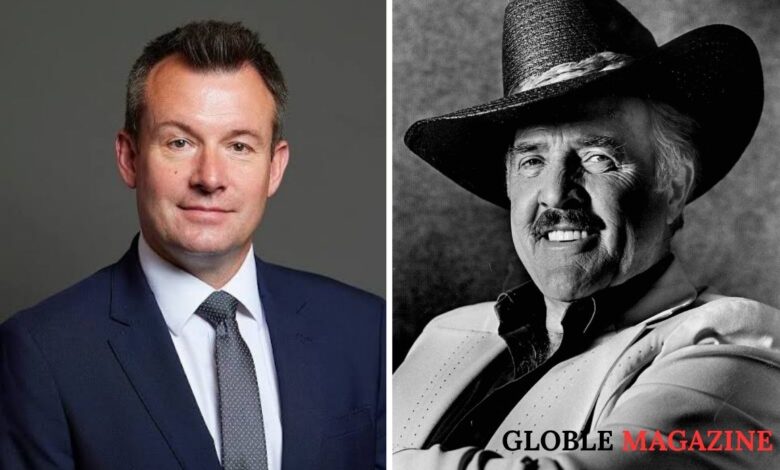
Few members of the British Parliament arrive at Westminster with a résumé as unusual as Stuart Anderson’s. Before he ever stood behind a dispatch box, he had already served as a soldier, been shot in the foot during training, run close-protection details in war zones, built a business, lost nearly everything, and rebuilt his life from the ground up. That mix of hard-earned resilience and public service has shaped a political identity that stands out even in a crowded House of Commons. For American readers who follow British politics, understanding this figure means looking past the party label and into a personal story defined by loss, recovery, and a stubborn commitment to keep showing up.
Today he represents South Shropshire as a Conservative Member of Parliament, a rural constituency in the English West Midlands region known for its rolling countryside and market towns. His path there was neither smooth nor guaranteed. This biography walks through his early years, his military service, his business ventures, his political rise, and the controversies that have followed him, offering a clear-eyed and balanced picture of a lawmaker whose life reads more like a novel than a typical political CV.
Quick Bio Table
| Detail | Information |
|---|---|
| Full Name | Stuart Paul Anderson |
| Date of Birth | July 17, 1976 |
| Birthplace | Hereford, Herefordshire, England |
| Nationality | British |
| Political Party | Conservative |
| Current Role | Member of Parliament for South Shropshire |
| In Office Since | July 4, 2024 |
| Previous Seat | Wolverhampton South West (2019–2024) |
| Military Service | British Army, Royal Green Jackets (1993–2001) |
| Notable Roles | Vice-Chamberlain of the Household; Shadow Defence Minister |
| Spouse | Married |
| Children | Five |
| Faith | Christian |
Early Life and Family Background
Stuart Anderson was born on July 17, 1976, in Hereford, a cathedral city in the western English countryside near the Welsh border. His childhood was marked early by tragedy. When he was just eight years old, his father, Samuel, died from a brain tumor that had been triggered by skin cancer. The loss left a lasting imprint, and Anderson has often credited it with shaping his understanding of grief, duty, and the fragility of life. It is a theme he has returned to repeatedly, both in interviews and in his work in Parliament.
Military service ran deep in the family long before Anderson put on a uniform himself. His father had served as a corporal in the elite Special Air Service, spending twelve years with the regiment and completing tours in Northern Ireland, Borneo, and Oman before returning home. It was after that service that Samuel met Anderson’s mother, Leslie, an army nurse. Growing up around this legacy, with a father buried in the SAS graveyard at St Martin’s Church in Hereford, gave the young Stuart a sense of the armed forces as both a calling and a family tradition.
From Soldier to Security Specialist
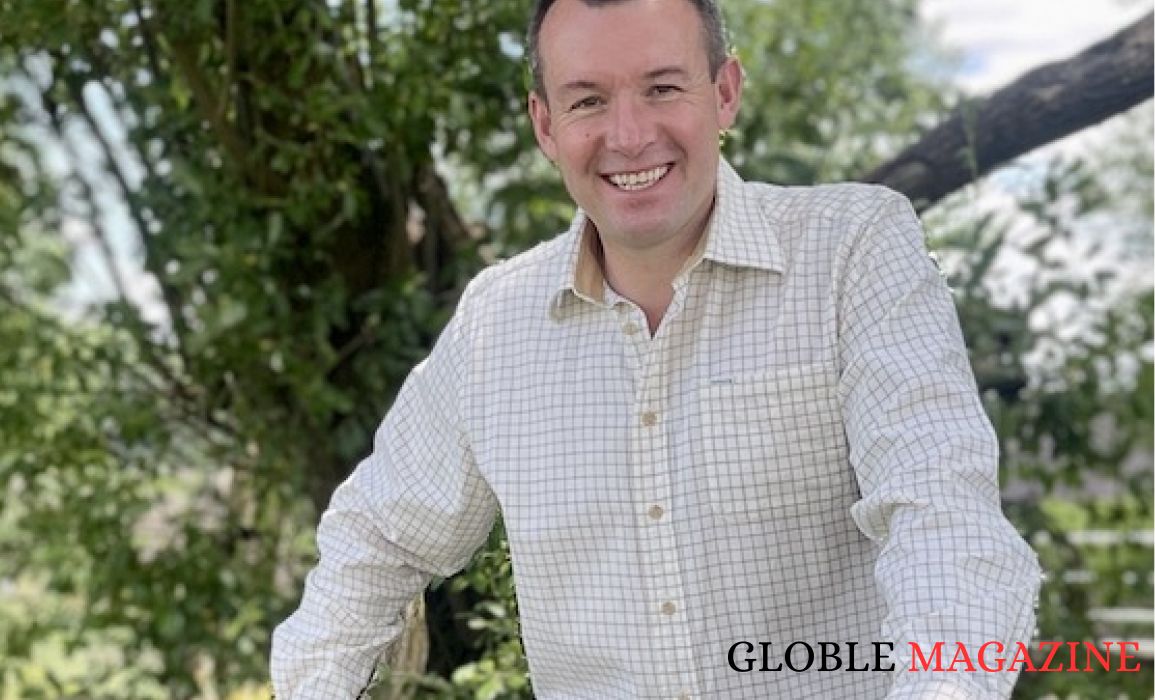
Anderson left school at sixteen and enlisted in the British Army, joining the Royal Green Jackets. His early years in uniform were not without incident. At seventeen, he was accidentally shot in the foot by a fellow soldier during a training exercise, an injury that would foreshadow the physical and psychological toll military life can take. Undeterred, he went on to serve tours in Northern Ireland as part of Operation Banner, as well as in Bosnia and Kosovo during the turbulent conflicts of the 1990s. He even attempted selection for the SAS, following in his father’s footsteps, though he did not pass. In total, he spent nine years in the army.
After leaving service around the age of twenty-five, Anderson moved into the private security world, where his military background proved highly marketable. He worked in close protection for high-profile clients across the United Kingdom, Africa, and the Middle East, including a stint guarding the Qatari prime minister. His work took him to more than fifty countries, and during the 2003 invasion of Iraq he ran security for U.S. federal government officials in Baghdad. These experiences gave him a global perspective and a network of contacts that few politicians can match.
Business Ventures and Financial Setbacks
In 2005, drawing on his security expertise, Anderson co-founded a Herefordshire-based firm called Anubis Associates. The company offered close-protection training, operational security for corporate executives, and consultancy services for industries ranging from petrochemicals to finance. For a time, business boomed alongside the global demand for security services during the war on terror. Anderson has described himself in this period as a “paper millionaire,” a phrase that captures both the apparent success and the fragility that lay beneath it.
That fragility became reality when Anubis Associates collapsed in 2012, a downturn Anderson attributes to the winding down of the war on terror. The fall was steep and swift. He has spoken openly about going from apparent wealth to relying on food parcels within the space of a month, losing his home and turning to a food bank. The collapse also drew scrutiny: administrators found the company owed substantial sums in unpaid tax and to creditors, and that Anderson, as a director and major shareholder, had received an illegal dividend based on profits that never materialized. Ordered to repay, he offered only a fraction of the amount, arguing that full repayment could push him into personal bankruptcy. Rather than hide from this chapter, he has repeatedly acknowledged it, describing the experience as painful but formative.
Within a week of that collapse, Anderson launched a new venture centered on personal safety and travel security, a company called eTravelSafety. He served as its chief executive in the years leading up to his entry into national politics. The firm later attracted attention when it emerged that, despite Anderson’s vocal support for Brexit, it had received significant funding tied to a European Union–backed regional investment program. These threads of business, finance, and public life would follow him into Parliament and become part of the scrutiny he faced as a candidate.
Entering Politics and the 2019 Election
Anderson’s move into elected office began at the local level, where he served as a county councillor in Herefordshire. In December 2018, he was selected as the Conservative candidate for Wolverhampton South West, a seat in the industrial West Midlands. A year later, at the December 2019 general election, he won it with 48.3 percent of the vote and a slim majority of just over 1,600. It was a notable victory in a constituency that had shifted political hands more than once, and it launched his career in national politics.
His debut in Westminster was not without friction. Shortly after the election, one national newspaper listed him among the most controversial new Conservative MPs, citing the illegal dividend from his defunct company. He also faced reports that an account bearing his name had edited his own online encyclopedia entry to remove references to those financial matters. These early episodes established a pattern that would recur throughout his career: a lawmaker whose candid personal story sits alongside legitimate public questions about his business past.
Career Milestones in Parliament
Once in office, Anderson built a reputation as a loyal party member who rarely broke ranks. His voting record shows consistent alignment with Conservative positions, and he seldom rebelled during his first term. Among the notable moments, he faced sharp criticism in October 2020 for voting against a motion to extend free school meals for disadvantaged children over the holidays during the COVID-19 pandemic. He defended his position by arguing that the broader welfare system, rather than schools, should support families outside term time. The backlash was intense, including protests outside his office and, he said, death threats against him and his family.
Anderson’s loyalty was rewarded with a steady climb through the government ranks. Over the course of his career he took on several roles of increasing responsibility, each reflecting the trust placed in him by successive party leaders. Key positions in his political résumé include:
- Assistant Government Whip (2022), his first role in the government’s parliamentary management team
- Lord Commissioner of the Treasury (2023), a senior whip position
- Vice-Chamberlain of the Household (2023–2024), a ceremonial and senior whip role linking Parliament and the Crown
- Shadow Minister for Defence (2024), drawing directly on his military background after the Conservatives moved into opposition
Throughout the leadership turbulence of 2022, when the Conservative Party cycled through multiple prime ministers, Anderson remained a visible supporter of Boris Johnson and later endorsed Liz Truss during her leadership bid. His steadfastness through these chaotic months underscored his instinct, rooted in his army days, to stand by colleagues through both good times and bad.
The Move to South Shropshire
Boundary changes and personal circumstances combined to reshape Anderson’s political future. Following a periodic review of parliamentary constituencies, his Wolverhampton seat was set to be redrawn, and projections suggested he could lose it under the new boundaries. In March 2023, he announced he would not seek reelection there, citing the toll that a toxic political environment and threats against his family had taken. He said his family had already moved away from the area over safety concerns, and that protecting them had become his priority.
Rather than leave politics, he found a new home in the rural constituency of South Shropshire, where he was selected as the Conservative candidate in July 2023. At the 2024 general election, he won the seat with 34.1 percent of the vote and a majority of just over 1,600, though this represented a sharp decline from the party’s much larger notional lead in the area. With the Conservatives now in opposition, he was appointed to the interim shadow front bench as Shadow Minister for Defence, a role that fit his experience naturally.
Personal Life, Faith, and Mental Health Advocacy
Behind the political career lies a deeply personal story that Anderson has chosen to share rather than conceal. He is married and has five children, and family has clearly been a central force in his decision-making, including his choice to leave his first seat. His willingness to speak candidly about private struggles has become one of his defining traits as a public figure, setting him apart from the more guarded style common among politicians.
In his maiden speech to Parliament, Anderson spoke openly about experiencing suicidal thoughts and battling alcoholism after leaving the military, and about how finding faith helped him recover. He is a Christian and has been associated with an evangelical church in Hereford, a connection that has itself drawn media attention over the years. His readiness to discuss veterans’ mental health, addiction, and recovery has given him a platform on issues that resonate far beyond party politics, and it reflects a broader effort to reduce the stigma surrounding these subjects. For many observers, this openness is the throughline that connects the soldier, the businessman, and the lawmaker.
Final Thoughts
The story of this South Shropshire representative is a study in reinvention. From a boy who lost his father young, to a soldier wounded in training, to a security contractor in global hotspots, to a businessman who lost it all and started again, Stuart Anderson has lived several lives before and during his time in politics. His career carries genuine achievements alongside real controversies, and an honest account has to hold both in view. That balance is precisely what makes his journey worth understanding.
What emerges is a portrait of a politician shaped as much by adversity as by ambition. Whether one agrees with his voting record or questions aspects of his business history, his willingness to speak plainly about grief, mental health, and personal failure has added a distinctive voice to Parliament. As he continues to represent his rural constituency, his life remains a reminder that the paths into public office are rarely straight, and that resilience can be forged in the most unexpected places.
Frequently Asked Questions
Who is Stuart Anderson?
Stuart Anderson is a British Conservative politician currently serving as the Member of Parliament for South Shropshire. He is a former British Army soldier and security specialist who entered national politics in 2019, and he is known for speaking openly about his personal struggles.
When and where was Stuart Anderson born?
He was born on July 17, 1976, in Hereford, a historic cathedral city in Herefordshire, England, near the border with Wales. His family had strong military roots, which influenced his own decision to enlist.
What military service did Stuart Anderson complete?
He served for nine years in the British Army with the Royal Green Jackets, roughly between 1993 and 2001. During that time he completed tours in Northern Ireland, Bosnia, and Kosovo, and he was accidentally shot in the foot during a training exercise at age seventeen.
What did Stuart Anderson do before becoming an MP?
Before politics, he worked in close protection and private security, guarding high-profile clients in more than fifty countries and running security operations in Baghdad during the Iraq War. He also founded two security-related companies, one of which collapsed in 2012.
Which constituency does Stuart Anderson represent?
He currently represents South Shropshire, a rural constituency in the English West Midlands, having won the seat at the 2024 general election. Before that, he served as the MP for Wolverhampton South West from 2019 to 2024.
Why did Stuart Anderson leave his Wolverhampton seat?
Boundary changes made his Wolverhampton seat difficult to retain, and he also cited safety concerns and threats against his family as reasons for stepping away. He then successfully sought and won the South Shropshire seat in 2024.
What government roles has Stuart Anderson held?
He has served as an Assistant Government Whip, a Lord Commissioner of the Treasury, Vice-Chamberlain of the Household, and Shadow Minister for Defence. These roles reflect a steady rise within his party’s parliamentary structure.
What controversies has Stuart Anderson faced?
He faced criticism over an illegal dividend received from a company that collapsed in 2012, as well as his vote against extending free school meals during the pandemic. He has generally chosen to address these matters openly rather than avoid them.
Is Stuart Anderson married and does he have children?
Yes, he is married and has five children. Family concerns, including their safety, have played a significant role in his personal and political decisions.
What has Stuart Anderson said about mental health?
In his maiden speech to Parliament, he spoke candidly about experiencing suicidal thoughts and alcoholism after leaving the army, and how faith aided his recovery. He has since become an advocate for veterans’ mental health and for reducing stigma around these issues.
This article discusses mental health, including suicidal thoughts. If you or someone you know is struggling, support is available; in the U.S., you can reach the 988 Suicide and Crisis Lifeline by calling or texting 988.
Stay connected with us for more updates: GLOBLE MAGAZINE