

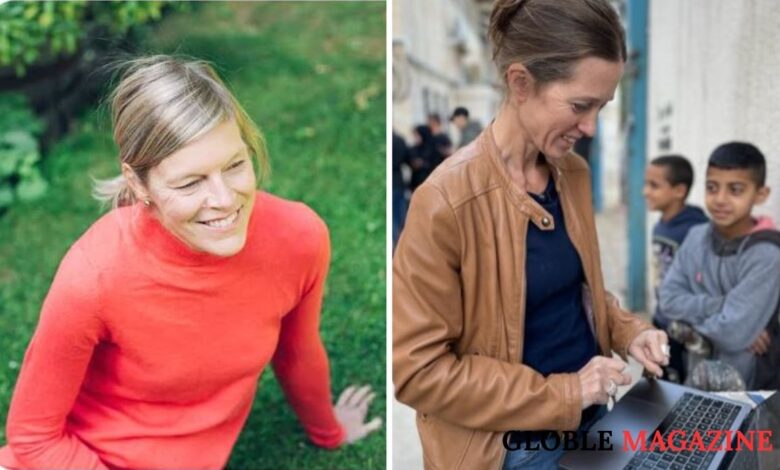
When a major story breaks in one of the world’s most dangerous corners, only a small group of journalists have the training, instincts, and steadiness to make sense of the chaos for millions of viewers at home. Lucy Williamson is one of them. As a long-serving foreign correspondent for BBC News, she has spent more than two decades reporting from earthquakes, elections, terror attacks, and active war zones, earning a reputation for calm, fact-driven storytelling that keeps ordinary people at the center of complicated events.
The most important thing to know about her is this: she is currently a BBC Middle East correspondent based in the Jerusalem bureau, one of the most demanding assignments in all of journalism, and she reached that post after distinguished tours in Indonesia, South Korea, and France. She officially joined the BBC in 2002, studied English and Persian at the University of Manchester, and became widely known to global audiences after her composed 2023 interview with online personality Andrew Tate.
This biography walks through her background, education, career milestones, reporting philosophy, and the personal facts readers most often search for. Everything here is drawn from publicly available information about her professional life, with clear notes wherever a detail is estimated rather than officially confirmed.
Quick Bio Table
| Detail | Information |
|---|---|
| Full Name | Lucy Williamson |
| Profession | Journalist / Foreign Correspondent |
| Employer | BBC News |
| Current Role | Middle East Correspondent (Jerusalem bureau) |
| Nationality | British |
| Education | University of Manchester |
| Degree | English and Persian (BA) |
| Graduation Year | 1997 (reported) |
| Joined BBC | 2002 |
| Notable Postings | Jakarta, Seoul, Paris, Jerusalem |
| Spouse | John Nilsson-Wright (academic, reported) |
| Known For | International conflict reporting, Andrew Tate interview |
| Languages | English, Persian (studied) |
Who Is Lucy Williamson?
Lucy Williamson is a British broadcast journalist whose career has been defined by on-the-ground foreign reporting rather than studio presenting or celebrity culture. She belongs to a category of correspondents the BBC relies on to explain fast-moving international stories with accuracy and context, often from places where the situation is dangerous, emotionally charged, or politically sensitive.
Over the years, she has become a familiar voice and face for viewers seeking to understand not only what is happening in a given crisis, but also why it matters and how real families are affected. Her reputation rests on professional credibility rather than public fame, and her own social media description is deliberately understated, framing her simply as a Middle East correspondent who arrived at that post by way of France, Korea, and Indonesia, a modest summary of an unusually wide-ranging career.
Early Life and Education
Details about Williamson’s childhood remain largely private, a choice consistent with her broader approach of keeping the spotlight on her work rather than herself. What is publicly known is that she grew up in the United Kingdom and developed an early fascination with languages, cultures, and world affairs, interests that would later become the backbone of her professional identity.
She went on to study at the University of Manchester, where she reportedly earned a degree in English and Persian, graduating in 1997. That academic pairing turned out to be strategically valuable, because studying Persian gave her linguistic and cultural insight into the Middle East long before she was ever posted there. Rather than approaching foreign assignments as an outsider armed only with a notebook, she arrived with genuine background knowledge, which helped her connect with local sources and interpret events with unusual depth.
Entering the World of Journalism
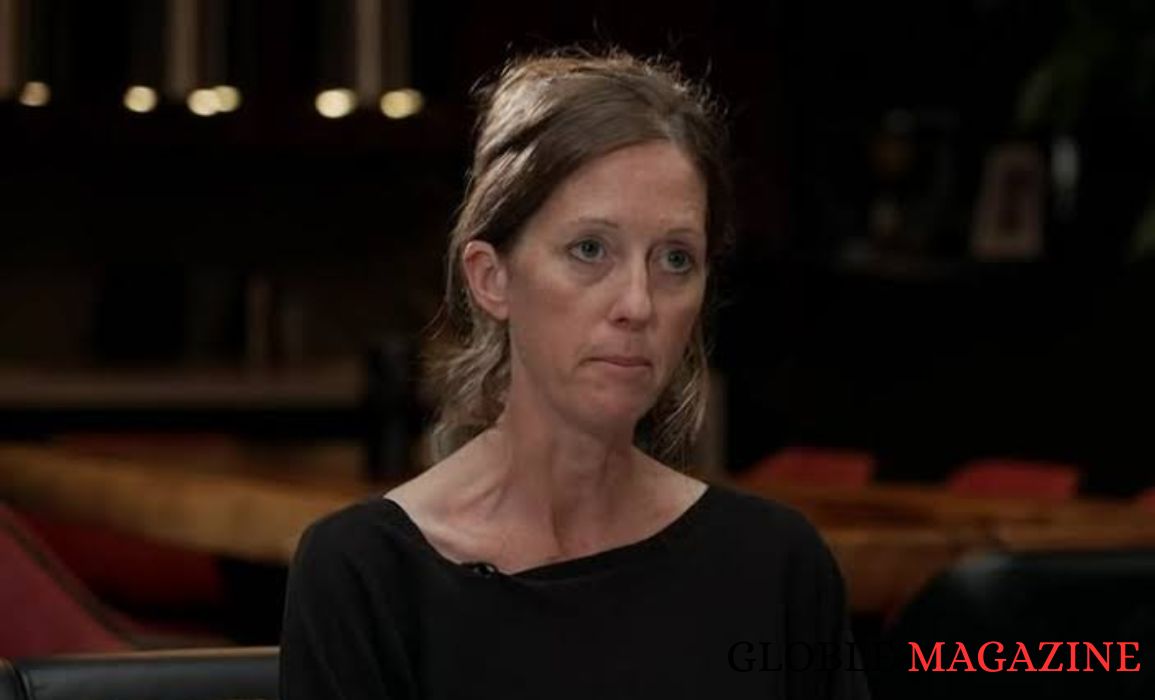
Like many respected reporters, Williamson did not begin at the top. She built her craft gradually, moving through the kind of early newsroom and reporting roles that teach a young journalist how to gather facts quickly, verify information, and write clearly under deadline pressure. This foundation mattered enormously, because the BBC’s editorial culture places heavy emphasis on accuracy, impartiality, and depth.
By the time she officially joined BBC News in 2002, she had developed the discipline required for serious international work. Her early assignments quickly signaled where her ambitions lay. Rather than settling into routine domestic coverage, she gravitated toward international stories and high-pressure environments, a preference that would shape the entire arc of her career and set her on the path toward foreign correspondence.
Building a Career at the BBC
After joining the broadcaster, Williamson steadily earned more demanding roles, and her progression reflected a combination of talent, adaptability, and a willingness to go wherever the story was unfolding. She moved from general reporting into foreign correspondent postings, the assignments that truly define a career in international news and separate seasoned reporters from newcomers.
What set her apart was not just her presence in difficult locations, but her ability to remain composed and coherent while events spiraled around her. Colleagues and audiences came to associate her name with reliability, and that trust is the most valuable currency a broadcast journalist can hold. Her rise through the ranks was steady rather than flashy, mirroring the very qualities that make her reporting effective in the first place.
Reporting from Asia: Jakarta and Seoul
One of Williamson’s most formative periods came in Asia, where she served as a correspondent covering some of the region’s most consequential stories. In Indonesia, she reported from Jakarta during a time of significant upheaval, including the long recovery from the devastating 2004 Indian Ocean tsunami, political tensions, and the aftermath of terrorist attacks. These assignments demanded emotional resilience alongside journalistic skill.
She later took up the post of Seoul correspondent, reporting on the Korean peninsula, one of the most tense geopolitical flashpoints on earth. Covering both North and South Korea meant navigating nuclear anxieties, diplomatic brinkmanship, and the ever-present possibility of sudden escalation. That experience sharpened her ability to explain volatile standoffs to a general audience, translating high-stakes diplomacy into clear, accessible reporting.
The Paris Years
In 2014, Williamson became the BBC’s Paris correspondent, a posting that placed her at the heart of European affairs during an extraordinarily turbulent stretch. Her time in France coincided with a series of events that dominated global headlines, and her steady coverage of them cemented her standing as a top-tier correspondent capable of handling both breaking crises and slower-burning political stories.
During this period, she reported on some of the most significant events in modern European history, including the following:
- The Charlie Hebdo attack and the Bataclan massacre, which shook France and reshaped the continent’s conversation about security and terrorism.
- The prolonged Yellow Vest protest movement, which exposed deep economic and social fault lines across French society.
- French presidential elections and the broader rise of populist politics across Europe.
- Ongoing debates over migration, including the dangerous Channel crossings that repeatedly strained relations between France and the United Kingdom.
This blend of hard security news, domestic unrest, and electoral drama allowed her to demonstrate remarkable versatility. One week she might be covering a fast-breaking terror attack, and the next she would be filing long-form analysis on the future of European politics.
The Andrew Tate Interview
Among the moments that brought Williamson wider public recognition was her 2023 interview with Andrew Tate, the controversial online personality who was then facing serious legal allegations in Romania. The encounter became a widely circulated example of composed, unflinching journalism. Rather than allowing the conversation to be derailed, she pressed him with direct questions about his views and the accusations against him, remaining calm even as he grew visibly agitated and insisted she was not in charge of the exchange.
The interview resonated far beyond the usual news audience, in part because it showcased a distinct professional skill. Holding a defiant subject accountable without losing control of the conversation, and without descending into spectacle, is genuinely difficult. Her later reporting on Tate’s online influence continued to attract attention for its disciplined, evidence-based approach.
Current Role: Middle East Correspondent
Williamson currently serves as a BBC Middle East correspondent based in the Jerusalem bureau, a position widely regarded as one of the toughest jobs in modern journalism. Reporting on the region during a period of intense conflict, she has covered developments across Gaza, the West Bank, Israel, and the wider Middle East, filing dispatches on ceasefires, military strikes, humanitarian crises, and the diplomatic maneuvering that surrounds them.
Her reports consistently pair the hard facts of a conflict with its human dimension, whether that means chronicling families separated by war or documenting the return of children evacuated from Gaza. This is exactly the kind of environment where her early Persian studies and years of international experience pay dividends, allowing her to add context that helps audiences move past headlines and slogans toward genuine understanding.
Reporting Style and Journalistic Approach
What distinguishes Williamson’s work is a reporting philosophy that prioritizes clarity, balance, and humanity over drama. She tends to build her stories around the lived experiences of ordinary people rather than relying solely on official statements or abstract political analysis, a technique that makes complex international events feel immediate and relatable.
Her on-camera manner is notably calm, even when she is reporting from chaotic or dangerous settings, and that steadiness helps audiences trust what she is telling them. She also avoids the self-promotional style that some modern correspondents adopt, choosing not to make herself the center of the story. This restraint is itself a form of professionalism, reflecting a belief that the people affected deserve more attention than the reporter narrating events.
Handling Criticism and Controversy
Reporting from deeply divided regions inevitably invites scrutiny, and Williamson has not been exempt. Like many correspondents covering the Middle East, her work has occasionally drawn criticism from observers who argue that particular reports reflect a certain framing. Such critiques are common for any journalist operating in a polarized environment, where audiences on opposing sides often expect coverage to align with their own perspective.
What matters for her credibility is a consistent commitment to verified facts and a range of viewpoints, standards that professional journalism treats as non-negotiable. Navigating this kind of pressure while continuing to report accurately is simply part of the job for anyone stationed in a conflict zone, and her ability to keep filing balanced, well-sourced reports under that scrutiny speaks to her resilience.
Personal Life
Williamson maintains a firmly private personal life, a stance that is both a matter of principle and, for correspondents in sensitive regions, a genuine security consideration. Journalists who work in conflict zones frequently limit what they share about their families precisely to reduce personal risk, and her discretion fits that pattern.
Publicly reported information indicates that she is married to John Nilsson-Wright, an academic whose own expertise centers on East Asian politics, a shared intellectual world that likely gives the couple an unusual mutual understanding of each other’s work. Beyond this, she has not publicly disclosed details about children, parents, or extended family, and much of the personal information circulating online, including her exact age, remains unconfirmed by official sources.
Facts, Frequently Searched Details, and U.S. Relevance
Because Williamson keeps a low personal profile, a number of details readers search for are estimates rather than confirmed facts. Her exact date of birth has not been officially published, though timeline clues such as her reported 1997 university graduation lead many sources to place her birth in the mid-1970s. Figures for her net worth that appear online are speculative and should be treated with caution, since the BBC does not publish individual salaries. She also lacks a comprehensive personal Wikipedia entry, which reflects her focus on reporting over self-promotion.
For American readers, her reporting offers a valuable window into stories that directly affect U.S. foreign policy and public debate, from Middle East diplomacy to European political shifts. In an era when many people form opinions about international conflicts based on fragmented social media clips, the work of experienced correspondents who have actually visited these places carries genuine weight. Her career demonstrates the enduring value of shoe-leather journalism: showing up, speaking with the people involved, verifying facts, and explaining them plainly.
Final Thoughts
Lucy Williamson‘s career is a study in quiet excellence. Across more than two decades and multiple continents, she has covered natural disasters in Asia, political turmoil in Europe, and active conflict in the Middle East, always with the same commitment to accuracy, balance, and human storytelling. She has done so without turning herself into the story, letting the quality and integrity of her reporting speak for itself.
In a media landscape crowded with hot takes and personal branding, her approach feels both old-fashioned and urgently necessary. Whether she is pressing a defiant interview subject or filing a dispatch from a war zone, she embodies the values that make foreign correspondence indispensable. For anyone who wants to understand the world beyond the headlines, her body of work is a reminder that careful, courageous journalism still matters.
Frequently Asked Questions (FAQs)
Who is Lucy Williamson?
Lucy Williamson is a British journalist and foreign correspondent for BBC News, known for her international reporting from Asia, Europe, and the Middle East. She has built a strong reputation over two decades for calm, fact-driven coverage of conflicts, elections, and humanitarian crises.
What is Lucy Williamson’s current role at the BBC?
She currently works as a BBC Middle East correspondent based in the Jerusalem bureau. In this role, she reports on developments across Gaza, the West Bank, Israel, and the broader region, covering both breaking events and their human impact.
Where did Lucy Williamson study?
She reportedly attended the University of Manchester, where she earned a degree in English and Persian, graduating in 1997. Her study of Persian later proved especially useful for understanding Middle Eastern politics and culture during her assignments there.
When did Lucy Williamson join the BBC?
Lucy Williamson officially joined BBC News in 2002. She began with reporting roles that emphasized international affairs and gradually advanced into major foreign correspondent postings around the world.
What countries has Lucy Williamson reported from?
Over her career, she has been posted to Jakarta in Indonesia, Seoul in South Korea, Paris in France, and Jerusalem in the Middle East. These assignments spanned tsunami recovery, nuclear tensions, terror attacks, elections, and armed conflict.
What is the Andrew Tate interview she is known for?
In 2023, Williamson interviewed online personality Andrew Tate while he faced serious legal allegations in Romania. The exchange drew wide attention because she remained composed and asked direct, accountability-driven questions even as he became agitated.
Is Lucy Williamson married?
Publicly reported information indicates she is married to John Nilsson-Wright, an academic who specializes in East Asian politics. She keeps her personal life private, so further family details are not officially confirmed.
How old is Lucy Williamson?
Her exact age has not been officially disclosed. Based on her reported 1997 university graduation, many sources estimate she was born in the mid-1970s, placing her in her late forties to early fifties.
Does Lucy Williamson have a Wikipedia page?
She does not have a comprehensive personal Wikipedia entry, which reflects her focus on journalism rather than self-promotion. Reliable information about her can instead be found through official BBC bylines and reputable news archives.
Why is Lucy Williamson respected as a journalist?
She is respected for her clarity, balance, and ability to explain complicated global events through the experiences of real people. Her willingness to report from dangerous regions while maintaining accuracy and composure has earned trust from audiences and peers alike.
Stay connected with us for more updates: GLOBLE MAGAZINE